 Home
Home Contact Us
 Site Map

Mentors / Co-investigators
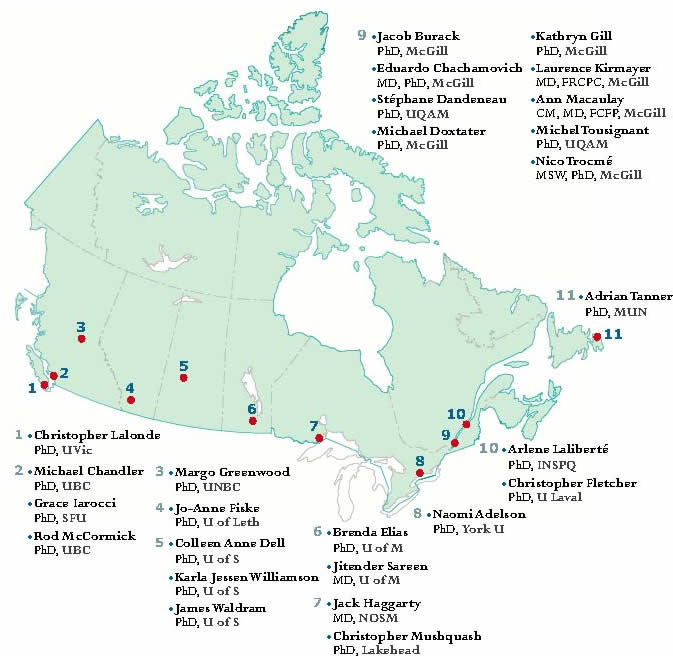
The co-investigators involved in this grant have extensive experience in Aboriginal health and related areas and represent a broad range of research skills and perspectives. Many have worked with each other on joint projects in the past.
Naomi Adelson, Ph.D. | Email
 Naomi Adelson, PhD, is an Associate Professor of Anthropology, Department of Anthropology, York University, Toronto. As a medical anthropologist, her theoretical interest lies in the critical examination of cultural meanings of health within the context of social, cultural and political conditions. That focus lead to the publication of Being Alive Well: Health and the Politics of Cree Well-Being (University of Toronto Press, 2000) and other publications on the naturalization and medicalization of social trauma, including “The Embodiment of Inequity: Health Disparities in Aboriginal Canada� (CJPH 2005) and “Discourses of Stress, Social Inequities, and the Everyday Worlds of First Nations Women in a Remote Northern Canadian Community� (Ethos 2008). Professor Adelson has conducted research in collaboration with the James Bay Cree since 1988 and is currently conducting ethnographic community-based research, in association with the Cree Board of Health, on the uses and integration of e-health technologies and the internet as a health resource.
Website: http://www.yorku.ca/laps/anth/faculty/adelson/index.htm
Amy Bombay, Ph.D. | Email
 Amy
Bombay is an Ojibway (Rainy River First Nation) researcher who completed her
PhD (2012) at Carleton University in Psychology and Neuroscience, and a
two-year CIHR postdoctoral Fellowship at the University of Ottawa Institute of
Mental Health Research. In July 2014, Amy joined Dalhousie University as an
Assistant Professor, being split between the Department of Psychiatry and the
School of Nursing. She has led and been involved in various quantitative,
qualitative, and mixed-methods projects investigating factors related to
well-being and mental health among Indigenous adults and youth living on- and
off-reserve. Her primary areas of inquiry have focused on exploring the
relationships between historical trauma, contemporary stressor exposure, and
well-being among Indigenous peoples in Canada. One of her main programs of research
has explored the different pathways by which Indian Residential School trauma
is transmitted across generations, which has garnered extensive media interest
and has been influential in influencing policy and practice related to
Indigenous health.
Amy
Bombay is an Ojibway (Rainy River First Nation) researcher who completed her
PhD (2012) at Carleton University in Psychology and Neuroscience, and a
two-year CIHR postdoctoral Fellowship at the University of Ottawa Institute of
Mental Health Research. In July 2014, Amy joined Dalhousie University as an
Assistant Professor, being split between the Department of Psychiatry and the
School of Nursing. She has led and been involved in various quantitative,
qualitative, and mixed-methods projects investigating factors related to
well-being and mental health among Indigenous adults and youth living on- and
off-reserve. Her primary areas of inquiry have focused on exploring the
relationships between historical trauma, contemporary stressor exposure, and
well-being among Indigenous peoples in Canada. One of her main programs of research
has explored the different pathways by which Indian Residential School trauma
is transmitted across generations, which has garnered extensive media interest
and has been influential in influencing policy and practice related to
Indigenous health.
Jacob Burack, Ph.D. | Email
 Jacob Burack, Ph.D., is Professor of School/Applied Developmental Psychology and Human Development in the Department of Educational and Counselling Psychology at McGill University, Director of the McGill Youth Study Team (MYST), and a researcher at Hôpital Rivière-des-Prairies. Jake, his students, and colleagues study predictors of academic success, social adaptation, and emotional well-being among adolescent students who live in First Nations communities. These factors are considered with regard to the adolescents’ identity with their own culture as opposed to the majority culture and their relation with their parents and peers.
Michael Chandler, Ph.D. | Email
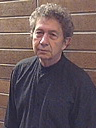 Michael Chandler, Ph.D., is a developmental psychologist engaged in research at the University of British Columbia, Canada. The focus of his ongoing program of research is to illustrate how an understanding of the normative course of young people's social-cognitive development, coupled with an appreciation of the role that culture plays in constructing the course of identity development, strongly shapes a youth's emerging sense of responsibility for their personal past and commitment to their future well being. Professor Chandler's research has earned him the Izaak Walton Killam Memorial Senior Research Prize, a Peter Wall Institute for Advanced Studies Distinguished Scholar in Residence fellowship, as well as his being appointed as Canada's only Distinguished Investigator of both the Canadian Institutes of Health Research and the Michael Smith Foundation for Health Research, 2001-2007. His scholarly efforts have also earned him the Izaak Walton Killam Memorial Teaching Prize. Most recently, his program of research dealing with identity development and suicide in Aboriginal and non-Aboriginal youth has been singled out for publication in the Society for Research in Child Development's Monographs.
Stéphane Dandeneau, Ph.D. | Email
 Stéphane Dandeneau, is currently assistant professor of psychology at the Université du Québec àMontréal. After completing his Ph.D. in social psychology at McGill University, Stéphane worked on the Roots of Resilience Project at the Culture and Mental Health Research Unit, Jewish General Hospital during his postdoc. Stéphane has broad interests in social psychology and social-cultural psychology and the underlying social cognitive processes of social resilience. His first line of research investigates the links between self-esteem, social stress, and attentional processes involved in perpetuating psychological insecurities. His research examines ways of training people with low self-esteem “high self-esteem-like skillsâ€� such as inhibiting social rejection which is shown to buffer against social and performance threats (www.selfesteemgames.mcgill.ca and www.mindhabits.com. His research also investigates sources of resilience and definitions of resilience from an Aboriginal perspective using a community-based approach with the Roots of Resilience Project (www.mcgill.ca/resilience). The current hegemony of individualistic conceptualisations of resilience in today’s literature overshadows other, more eco-centric, conceptualisations. Using a combination of qualitative and quantitative methods, the project aims to develop a more culturally appropriate model of resilience as well as showcase the many different facets of Aboriginal people’s strengths.
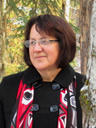 Dr. Margo Greenwood, Academic Leader of the National Collaborating Centre for Aboriginal Health, is an Indigenous scholar of Cree ancestry with more than 25 years' experience focused on the health and well being of Indigenous children, families and communities and is an Associate Professor in both the First Nations Studies and Education programs at the University of Northern British Columbia. While her academic work crosses disciplines and sectors, she is particularly recognized regionally, provincially, nationally and internationally for her work in early childhood care and education of Indigenous children and public health. Margo has served on numerous national and provincial federations, committees and assemblies, and has undertaken work with UNICEF, the United Nations, and the Canadian Reference Group to the World Health Organization Commission on Social Determinants. Margo received the Queen's Jubilee medal in 2002 in recognition of her years of work to promote awareness and policy action on the rights and well-being of Aboriginal and non-Aboriginal children, youth and families. Margo was also recognized in 2010 as the ‘Academic of the Year’ by the Confederation of University Faculty Associations’ of B.C. for her research contributions to the wider community. Most recently she was honoured with the National Aboriginal Achievement Award for Education in 2011.
Eduardo Chachamovich | Email
 Eduardo Chachamovich, MD, PhD, is a clinical psychiatrist and an Assistant Professor at the Department of Psychiatry at McGill University. He completed his PhD in Brazil and UK, where he explored modern psychometric approaches to measure multidimensional health phenomena in a large multicenter World Health Organization project. He was selected for a postdoctoral fellowship at the McGill Group for Suicide Studies, in which he took part in a comprehensive assessment of risk and protective factors for Inuit suicide completion in the Territory of Nunavut. Dr. Chachamovich̢۪s work focuses mainly on social and clinical determinants of mental health in Aboriginal populations. He is also interested in exploring strategies to develop valid and culturally-appropriate measures for mental health in Aboriginal contexts.
Website: www.douglas.qc.ca/researcher/eduardo-chachamovich
 Dr. Christopher Mushquash is Ojibway and a member of Pays Plat First Nation. His identity is strongly rooted in his Aboriginal culture and in his experiences growing up in a rural Northern Ontario community. Dr. Mushquash obtained his Ph.D. in clinical psychology at Dalhousie University and completed his pre-doctoral residency in the Faculty of Medicine at the University of Manitoba, specializing in rural and northern clinical practice. His clinical training emphasized the importance of understanding the unique contexts and issues experienced by individuals living in rural and northern communities. His research interests include personality and motives for substance misuse, and cultural issues in measurement, assessment, and treatment. However, he has a broad interest in qualitative and quantitative Aboriginal health research on topics including, but not limited to, substance abuse, trauma, self-harm and suicide, resilience, and community-based approaches to healing. Dr. Mushquash has consulted to the Centre for Addiction and Mental Health (CAMH), and Health Canada (First Nations Inuit Health) on issues related to culturally appropriate addictions treatment and program development. He was a member of the First Nations Addictions Advisory Panel and is currently on the National Native Alcohol and Drug Abuse Program (NNADAP) Renewal Leadership Team (a partnership between the Assembly of First Nations, National Native Addictions Partnership Foundation, and Health Canada). He is a member of the Advisory Board of the CIHR Institute of Aboriginal Peoples̢۪ Health. Dr. Mushquash is an Assistant Professor in the Department of Psychology at Lakehead University.
Colleen Anne Dell, Ph.D. | Email
 Colleen Anne Dell, Ph.D., is an Associate Professor and Research Chair in Substance Abuse at the University of Saskatchewan, Department of Sociology & School of Public Health. She is also a Senior Research Associate at the Canadian Centre on Substance Abuse in Ottawa. Her research interests include the relationship between identity and healing from drug addiction, women and girls̢۪ self-harm, the connection between youth resiliency and inhalant abuse, and the role of equine-guided therapy in healing from addictions. Colleen has also worked extensively at the community and national levels, including at the Elizabeth Fry Society of Manitoba and the Senate of Canada. She has introduced university students, and a host of community members to community-based research approaches over the past decade.
Michael Doxtater, Ph.D. | Email
Michael Doxtater, Ph.D., was raised on the Six Nations Indian Reserve near Brantford, Ontario. As an expert in organizational change, Dr. Doxtater teaches and practices organizational learning. He has taught and written about conflict resolution based on his expertise as a mediator at the Red Hill Valley, Tutelo Heights, and Eagles Nest. His organizational change assignments include national Canadian programs as well as private and non-government projects. For example he was a member of the restructuring team for the American Indian Program at Cornell University. Other experience includes the public and private sector-- Government of Canada, the National Film Board of Canada (NFB), the Native Business Summit Foundation of Canada, and McGill University. Dr. Doxtater has been the executive producer of NFB Studio One, manager of the Native Business Summit, and director of Indigenous education for McGill University. A career in media and communications provides the basis for his teaching college and university writing in Canada and the United States. He wrote, produced and directed nearly 20 drama and documentary films, network radio programs, and major publications in Canada and the United States. Dr. Doxtater is Associate Professor of Integrated Studies in Education at McGill University. He currently lives with his wife Kahente and their six children near Montreal, Quebec.
Brenda Elias, Ph.D. | Email
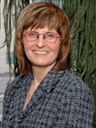 Dr. Elias is an Assistant Professor in the Department of Community Health Sciences in the Faculty of Medicine. Her research interests include 1) developing comprehensive and theoretically informed approaches to health administrative data and applying mixed methods to understand the health of indigenous populations; 2) developing research and knowledge translation networks and partnerships to bridge individuals, families and communities across multi-jurisdictional health care systems; and 3) bridging population/public health, health services, clinical-community intervention research, and molecules to family to community research to address health inequalities.
In 2006, Dr. Elias was awarded a five-year Canadian Institutes of Health Research New Investigator Award, for the following research program. This research program is based on a participatory transdisciplinary academic and community approach that she launched at the Manitoba First Nations Centre for Aboriginal Health Research. This approach 1) creates additional research capacity in the social determinants of health; 2) responds to the growing demand for evidence-based health and social policy; 3) links population-based studies to clinical, biomedical and intervention research, and 4) supports knowledge translation networks. This program addresses the need for new theoretical and methodological approaches to understanding health 1) across the life course, 2) within and across genders, families and communities, 3) within health conditions, 4) within and across population groups, and 5) within and across health service jurisdictions (e.g. tribal, provincial, and federal).
Dr. Elias̢۪ research program provides opportunities for future research collaborations, involving new transdisciplinary academic research and community networks, and for student training.
Jo-Anne Fiske, Ph.D. | Email
Jo-Anne Fiske, Ph.D., is professor of Women's Studies and former Dean of the School of Graduate Studies at the University of Lethbridge. Her main research interest lies in political economy of gender relations, in particular the complex interweaving of impacts of social and health policy, co-existing legal orders, and decline of resource economies on the health and well being of Aboriginal women. She has recently completed research projects investigating Indigenous Women's Mental Health, social and cultural impacts of social welfare reform on single mothers, and the outcomes of healing programs for Aboriginal victims of trauma. Her recent publications include Seeking Alternatives to Bill C-31: From Cultural Trauma to Cultural Revitalization through Customary Law and Making the Intangible Manifest: Healing Practices of the Qul- Aun Trauma Program. Her work has appeared in American Indian Culture and Research Journal, Feminist Studies, Ethnohistory, Atlantis, and Culture, among other journals. Currently, she is the principal investigator on a study of the impact of a declining resource economy on women with multiple care-giving roles, and a co-investigator on the impacts of the NIMBY (not in my backyard) phenomenon on Aboriginal well being and housing. She is also engaged in research on the pathologizing of children of caregivers who are frequent gaming players at bingo and casino venues in rural areas.
Christopher Fletcher, Ph.D. | Email
 Christopher Fletcher, Ph.D., is an Associate Professor at the Université Laval and an Adjunct Professor in Anthropology at the University of Alberta. He holds an M.Sc. and Ph.D. (2002) from l'Université de Montréal and a BES from the University of Waterloo.
Christopher is an ecological and medical anthropologist whose primary work for the past 15 years has been with arctic and subarctic Aboriginal communities in Canada. He has also conducted research on the social expression of illness experience in Nova Scotia and he has ongoing interests in urban spaces in France and Canada. His research is animated by the idea of ecological subjectivity as a part of human experience. Within each of his research areas he is interested in the articulation of traditional and alternative research methods, tools and dissemination strategies. He teaches medical, ecological and visual anthropology and studies visual pedagogy.
He has worked for close to twenty years with people in communities in Labrador, Nunavik, Nunavut and the Northwest Territories on a variety of issues including mental health and healing, Aboriginal health knowledge, traditional medicinal practices, ecological issues and educational projects. He continues to work closely with northern communities and organizations.
He is also a co-investigator on Nasivvik NEAHR.
Kathryn June Gill, Ph.D. | Email
Kathryn June Gill, Ph.D., is an Associate Professor of Psychiatry and member of the Division of Social and Transcultural Psychiatry at McGill University, and the Director of Research at the Addictions Unit of the McGill University Health Centre (MUHC). She obtained her PhD in psychology, and conducted post-doctoral studies at the Alcohol Research Centre, and the Addiction Research and Treatment Services of the University of Colorado. She divides her time between working at the Addictions Unit treating patients with drug- and alcohol dependence using a combination of group and individual CBT-oriented psychotherapy, teaching at McGill University and conducting research at the Addictions Unit and the Research Institute of the MUHC.
Dr Gill's clinical research program is focused on mental illness, substance dependence and gambling with ongoing projects related to help-seeking and barriers to treatment for urban Aboriginals, gambling practices and addiction among the Cree peoples of James Bay, as well as predictors of treatment outcome. Most recently, Dr. Gill and other members of the Addictions Unit staff have been involved in developing and testing a training program for front-line practitioners and other clinicians entitled “Treating Substance Dependence and Mental Illness: Tools for Practitioners.� This program was designed to facilitate the adoption of evidence-based practice in the treatment of clients with addictions and comorbid mental illness. Training modules make extensive use of case studies, videotaped materials, workshops and lectures to transmit skills related to screening, assessment, diagnostic criteria, detoxification methods, identification and treatment of psychiatric comorbidity and brief interventions.
Jack Haggarty, M.D., FRCPC | Email
 Jack Haggarty, M.D., is a psychiatrist in Thunder Bay, Ontario. A graduate of McMaster Medical School, he completed his residency at the University of Ottawa (Family Medicine), and the University of Western Ontario (Psychiatry). He is Medical Director of Community Mental Health Services, St. Joseph̢۪s Care Group, and Clinical Director of Shared Mental Health Services Fort William and Port Arthur Clinic in Thunder Bay, serving over 30 family physicians and 50,000 patients. As Associate Professor (Northern Ontario Medical School) and Adjunct Professor (Lakehead University), he has presented internationally on collaborative mental health, health outcomes, as well as publishing scientific papers on trans-cultural epidemiological research of Canada̢۪s Inuit and First Nations people. He is a fellow of the Royal College of Physicians of Canada, and a Diplomat of the Board of Neurology and Psychiatry.
Grace Iarocci, Ph.D. | Email
Grace Iarocci, Ph.D., is associate professor of Clinical Psychology and Michael Smith Foundation for Health Research scholar at SFU. Dr. Iarocci is interested in the study of risk and protective factors that impact the development of Aboriginal youth. Specifically, she focuses on factors at various ecological levels (e.g., family, school, community and culture) that may promote or impede the development of social competence and educational outcomes.
Laurence J. Kirmayer, M.D., FRCPC | Email
 Laurence J. Kirmayer, MD, FRCPC, is James McGill Professor and Director, Division of Social and Transcultural Psychiatry, Department of Psychiatry, McGill University. He is Editor-in-Chief of Transcultural Psychiatry, a quarterly scientific journal published by Sage (UK) and directs the Culture & Mental Health Research Unit at the Department of Psychiatry, Jewish General Hospital in Montreal where he conducts research on mental health services for immigrants and refugees, psychiatry in primary care, the mental health of indigenous peoples, and the anthropology of psychiatry. He founded and directs the annual Summer Program and Advanced Study Institute in Social and Cultural Psychiatry at McGill. He also directs co-directs the Network for Aboriginal Mental Health Research. His past research includes funded studies on the development and evaluation of a cultural consultation service in mental health, pathways and barriers to mental health care for immigrants, somatization in primary care, Inuit concepts of mental health and illness, risk and protective factors for suicide among youth in Nunavik, and resilience among Indigenous peoples. He co-edited the volumes, Current Concepts of Somatization (American Psychiatric Press), Understanding Trauma: Integrating Biological, Clinical, and Cultural Perspectives (Cambridge University Press), and Healing Traditions: The Mental Health of Aboriginal Peoples in Canada (University of British Columbia Press).
Website: www.mcgill.ca/tcpsych
Arlene Laliberte | Email
 Arlene Laliberté is an Anishenabe woman from Timiskaming First Nations in Northwestern Quebec. She holds a PhD. in community psychology with experience in suicidology, mental health promotion and program evaluation. Her doctoral research consisted of the psychological autopsies of 30 consecutive adult Aboriginal suicides. Subsequently, as a postdoctoral fellow with the University of Queensland’s North Queensland Health Equalities Promotion Unit, Arlene worked with members of Australian Aboriginal communities on several “up-streamâ€� participative research projects. She is currently a researcher-investigator with the Centre de recherche du Centre hospitalier de l’Université de Montréal and postdoctoral fellow at the Institut national de santé publique du Québec working on mental health promotion and social inequalities of health.
Christopher Lalonde, Ph.D. | Email
 Christopher Lalonde, Ph.D., is an Associate Professor in the Department of Psychology, University of Victoria. His research focuses on cultural influences on identity formation and social-cognitive development. He is currently engaged in research projects that examine the role of culture in the health and well-being of Aboriginal youth. In partnership with the Inter Tribal Health Authority, he is involved in a study of injury rates within First Nations communities on Vancouver Island. In collaboration with the Assembly of Manitoba Chiefs, he is beginning a project in Manitoba that examines culture and healthy youth development. At UVic, he is also helping to direct the LE,NONET Project that aims to enhance the success of Aboriginal undergraduate students. He is the Director of the Network Environments for Aboriginal Health Research (NEARBC - Vancouver Island), and Co-Director of the UVic Centre for Aboriginal Health Research. For more information, see his website.
Ann C. Macaulay CM, MD, FCFP | Email
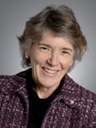 Ann C. Macaulay CM, MD, FCFP is a Professor of Family Medicine at McGill University and from 2006 – present, Inaugural Director of the new center ‘Participatory Research at McGill’ http://pram.mcgill.ca whose mission is to build capacity in participatory research and integrated knowledge translation. This includes offering workshops in partnership with Aboriginal researchers to role model the partnership approach to research. She was a family physician in the Mohawk community of Kahnawake from 1970-2008, principal investigator 1994-2006 of the participatory research Kahnawake Schools Diabetes Prevention Project and continues her association with them as a member of the research team www.ksdpp.org Memberships include Institute of Medicine USA (2005) and past board member of Canadian Institutes of Health Research Institute of Aboriginal Peoples’ Health. Awards include Wood Award from the North American Primary Care Research Group (2009), Canadian Family Medicine Researcher of the Year (2008) and the Order of Canada (2006).
Rod McCormick, Ph.D. | Email
Rod McCormick, Ph.D., is a Mohawk Psychologist at the University of British Columbia where he works as an Associate Professor in the Counselling Psychology Program. For 7 years Dr. McCormick was also Director of the Native Indian Teacher Education Program at the same university. This researcher's area of specialization is Aboriginal mental health and the development of culturally-appropriate healing approaches for Aboriginal people. Dr. McCormick has numerous research projects and publications in this field. Dr. McCormick also works as a clinical consultant to several Aboriginal healing centres and organizations as well as government departments such as Health Canada.
Jitender Sareen, Ph.D. | Email
 Dr. Sareen is a Professor of Psychiatry in the Departments of Psychiatry, Psychology and Community Health Sciences at the University of Manitoba. He currently serves as the Director of Research and Anxiety Services in the Department of Psychiatry at the Health Sciences Centre in Winnipeg. He is also a consulting psychiatrist for the Veterans Affairs Canada Operational Stress Injury Clinic at Deer Lodge Hospital in Winnipeg.
He has been supported by numerous national and local peer-reviewed grants in the areas of military mental health, Aboriginal suicide, and homelessness. Although his research interests are quite diverse, he is leading a large partnership grant with First Nations communities in Northwestern Manitoba to improve the understanding of suicide and suicide prevention measures (Swampy Cree Suicide Prevention Team); He is also the Winnipeg Site Co-Principal Investigator for the Mental Health Commission of Canada's Research Demonstration Project in Homelessness and Mental Health (At Home / Chez Soi Study), and is the Acting Director of the Psychiatric Neuroimaging Research Group.
He holds two salary support awards: 1) The Canadian Institutes of Health Research New Investigator Award, and the Manitoba Health Research Council Chair Award. He has also received national awards for excellence in research (Canadian Psychiatric Association) and teaching (University of Manitoba).
Adrian Tanner, Ph.D. | Email
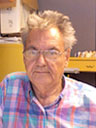 Dr. Tanner is Honorary Research Professor of Anthropology at Memorial University, where he taught for many years. His work with the network includes research and publications on social breakdown among northern Aboriginal peoples, and on local initiatives for the healing movement. Dr. Tanner is also continuing work on a number of projects related to northern Aboriginal environmental stewardship. His research in this area includes the use of GIS and other digital techniques to record the values that northern Cree First Nations have in their traditional lands, as well as on the impact of commercial forestry. Dr. Tanner is also the Principal Researcher in a long-term project, begun in 1985, entitled: "Cultural codes and representations in Central Viti Levu, Fiji". He conducted 5 months of fieldwork for this project in 2008, and is now working on a regional ethnography. He has recently published a paper on the land tenure system in this region of Fiji from the perspective of Common Property Theory.
Michel Tousignant, Ph.D. | Email
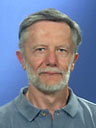 Michel Tousignant, Ph.D., completed his doctoral degree in Human Development at the University of Chicago. His thesis topic dealt with the representation of diseases in Nicolas Ruiz, a Mayan village in the state of Chiapas, Mexico. He is interested in the Quichua natives' (of Ecuador) idea of emotions, especially their theory about the notion of sadness, or llaqui. He has also shown interest in the mental health of immigrants and refugees, first as a commissioner of a Canadian government study group on this topic, then as a researcher examining adaptation in adolescents from refugee families. He is presently directing a research program on aboriginal suicide prevention in Algonquin and Attikamekw villages.
Nico Trocmé, MSW, Ph.D. | Email
Nico Trocmé, MSW, Ph.D., is a Professor and holds the Philip Fisher Chair in Social Work at the School of Social Work, McGill University, and is the Scientific Director of the Centre of Excellence for Child Welfare. Dr. Trocmé is the Principle Investigator (PI) for the Canadian Incidence Study of Reported Child Abuse and Neglect, 2008 (CIS-2008), and was the PI for the previous cycles as well (CIS-2003 and CIS-1998). He is also involved with a number of research teams, including the development and evaluation of home-based comprehensive treatment models in situations of chronic neglect and a survey of risk and resilience for youth receiving child welfare services. Dr. Trocmé was the chair of the National Advisory Committee overseeing the evaluation of the Alberta Response Model and was as a member of the Ontario Panel of Experts on Child Protection and of the Panel d’experts for the Association des centres jeunesse du Quebec. He has presented expert evidence at several coroner inquests and provides evaluation and service planning consultation to a number of child welfare organizations. Prior to completing his Ph.D., Dr. Trocmé worked for five years as a child welfare and children's mental health social worker.
James Waldram, Ph.D. | Email
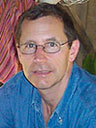 James Waldram, Ph.D., is a medical and psychological anthropologist and Professor in the Departments of Psychology, Archaeology and Anthropology, at the University of Saskatchewan. His recent research includes: the forensic psychiatric treatment of Aboriginal and non-Aboriginal offenders in western Canada, including a CIHR-funded project on the treatment of sexual offenders, traditional Aboriginal healing in the community and institutional contexts, and traditional Maya healing in southern Belize. He is the author of several books including “Revenge of the Windigo: The Construction of the Mind and Mental Health of North American Aboriginal Peoples,� published by the University of Toronto Press in 2004.
Dennis C. Wendt, Ph.D. | Email
 Dennis C. Wendt is an Assistant Professor with the Department of Educational and Counselling Psychology at McGill University. He has conducted research with Indigenous communities in the United States and Canada since 2009. He completed his PhD in Clinical Psychology at the University of Michigan in 2015 (where he was mentored by Joseph Gone). He then completed a postdoctoral research fellowship with the Alcohol and Drug Abuse Institute at the University of Washington in Seattle (mentored by Dennis Donovan). Dr. Wendt's research focuses on partnering with Indigenous communities in exploring, developing, and evaluating culturally relevant interventions pertaining to mental health, substance use, and community wellness. He is currently working on collaborative projects with Indigenous communities in Washington state and Quebec concerning culturally-centered and holistic substance use disorder prevention and treatment.
Karla Jessen Williamson, Ph.D. | Email
 Karla Jessen Williamson, Ph.D., is Assistant Professor of Educational Foundations. She was born in Greenland and is Kalaaleq: an Inuk from Greenland. She received her primary education in Greenland, and attained her high school diploma in Denmark.
Since moving to Canada, Karla has completed Bachelor’s and Master’s degrees in her third language – English – at the University of Saskatchewan. Her Master’s thesis dealt with Inuit child-rearing practices as they relate to the Inuit relationship with the land in Pangnirtung, Nunavut.
Her PhD studies at the University of Aberdeen in Scotland, analyzed Inuit gender relations in a post-colonial Greenland community.
Karla has published a number of articles and edited the Journal of Indigenous Studies. She was the first and only female Executive Director of the Arctic Institute of North America – University of Calgary and was Senior Researcher for Inuit Tapiriit Kanatami – a national organization for the Inuit in Canada. She is co-investigator of Roots of Resilience – managed by McGill University’s Culture and Mental Health Research Unit.
Karla is married to Dr. Robert Williamson, and is blessed with two children and two grandchildren.